





Everything You Need to Know Before You Commission
The first mistake with sapphire is thinking the colour name is enough.
Blue, teal, pink, padparadscha - the name tells you where the conversation begins, not whether the stone is right. What matters is how the colour behaves in light, how deep it goes, whether the cut keeps it alive, and what happens when the stone is finally on the hand.
That is why sapphire is one of the most interesting stones for an engagement ring. It is not only chosen for beauty. It is chosen for character.
And this year, one colour keeps returning to the studio with particular force: Teal sapphire.

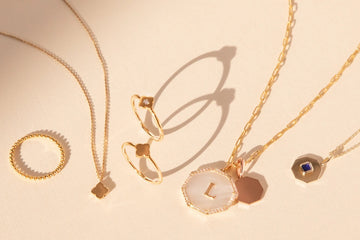
Kimjoux's Bespoke Lucky Lock Pendant with Montana Sapphire
Why Sapphire Has Never Been a Secondary Choice
The evidence does not support the idea that sapphire is a lesser option.


The Rockefeller Sapphire, a Kashmir stone of exceptional quality, became part of auction history.

The Blue Belle of Asia, a 392-carat Ceylon sapphire, reached over seventeen million dollars at Christie's Geneva in 2014.
These are not stones chosen for fashion. They are chosen for presence, rarity and a colour that does not fade from memory. The clients I work with now are choosing sapphire for exactly those reasons, even if they would not frame it that way. They want colour with conviction. They want something deliberate. They want a stone with depth, not just brilliance.
The most famous sapphire engagement rings in the world belong to someone else. A commissioned sapphire ring should not feel like a reference. It should feel like a decision.
Why Sapphire Is Different From Every Other Stone
Sapphire holds colour. It carries it inside the stone and releases it differently depending on where you are, what light is in the room and what you are looking for.
A blue sapphire can be clean and luminous in morning light, then deeper and more violet by evening.
A teal sapphire moves between blue, green and grey depending on the room.

A pink sapphire changes completely beside yellow gold.

This is why I describe sapphire as a stone with depth rather than instant performance. It does not announce itself. It asks you to come closer, to watch how it behaves, to understand it over time.
For a stone worn every day for the rest of a life, that quality matters more than people initially realise.
Every Sapphire Colour Starts a Different Conversation
One of the biggest misconceptions about sapphire is that the choice is simply between blue and everything else.
The range is far wider than most buyers realise, and each colour attracts a completely different kind of person.
Blue sapphires are where most people begin. Kashmir sapphires are celebrated for their velvety, almost liquid quality of colour. Sri Lankan sapphires tend to be brighter and more luminous. Madagascan stones offer strong saturation and exceptional clarity. Australian sapphires run deeper and more complex.
Pink sapphires suit clients who want warmth without the formality of blue. Some are barely-there blush. Others are vivid and confident. The right pink sapphire is precise rather than soft, warm without being obvious.
Padparadscha sapphires are among the rarest stones I work with. The name describes a specific balance of pink and orange, named after the lotus blossom in Sinhalese. A fine padparadscha sits between two moods at once and is genuinely difficult to source twice.
Yellow, champagne, purple and green sapphires each carry their own personality. Understanding which suits a client requires understanding the person first.
Of all the sapphire colours I have discussed this year, teal is the one clients return to most often.
Teal Sapphire: For the Client Who Already Knows

Kimjoux's Bespoke Lucky Lock Pendant with Montana Sapphire
Teal sapphire is not a trend. It is a stone that has existed for a long time and is finally getting the attention it deserves.
The colour sits in the blue-green spectrum, but the finest teal sapphires are never simply blue-green. They shift. They move. They are one colour in sunlight and something else entirely under artificial light. In Australian parti sapphires, blue, green and sometimes yellow appear within the same stone simultaneously, one of the more remarkable things in gemology and impossible not to be drawn to.
The two origins I source from most for teal sapphire are Montana and Australia.
Montana sapphires have a cool, steely contemporary quality. Strong colour without heaviness. A clean, increasingly well-documented supply chain. They work beautifully on the hand because the colour has strength without becoming heavy.

Kimjoux's Bespoke Earring & Pendant with Step-cut Oval Sapphire
Australian parti sapphires are more complex and more individual. Moodier, more layered. No two stones feel the same, which makes them especially compelling for bespoke sapphire engagement rings.
Teal sapphire offers something specific: colour with restraint. Distinction without noise. A stone that feels genuinely personal without requiring explanation.
The clients drawn to teal tend to arrive at the colour independently. They arrived at this colour through their own process, and the stone tends to reflect that.
Is Sapphire Durable Enough for Everyday Wear?
Yes and significantly so.
Sapphire ranks 9 on the Mohs hardness scale, second only to diamond at 10. For a stone that will be worn daily for decades, this matters enormously.

The Current Classic Ring - Intense Yellow Sapphire & Side Pearshape Diamonds Ring
Durability is rarely what draws my clients to sapphire. They come for the colour - the way it shifts through the day, the way it looks different in a meeting room versus candlelight, the way it feels entirely personal from the moment they choose it. The fact that it will look the same in twenty years is something they appreciate later, once the piece has become part of how they move through life.
What I Actually Look For When Sourcing a Sapphire
This is the part most guides leave out.
Size is the last thing I consider.
Colour comes first. The question is never whether the colour is intense enough, the measure is balance. Depth without darkness. Saturation without heaviness. A colour that feels alive across multiple light sources, not just impressive in a display case.
Then how the stone handles light. Some sapphires darken too much at the centre. Some show windowing, where light passes through instead of returning. Some have colour zoning that adds character. Others have zoning that interrupts the stone completely. None of this appears in a certificate.
Then cut quality. Massively underrated in sapphire. A well-cut sapphire makes the colour perform. A poorly cut stone makes even a rare sapphire feel flat. No origin, certificate or carat weight compensates for a stone that does not come alive on the hand.
Then treatment. Most sapphires are heat-treated. This is standard and widely accepted when disclosed properly because it is a permanent treatment. Untreated sapphires of fine colour command a premium because they are rarer. What matters is understanding exactly what you are looking at and why the stone is priced as it is.
Finally, presence. A sapphire can have the right origin, size and certificate and still leave me unmoved. Another stone, less obvious on paper, can be completely compelling the moment it is turned in the hand.
That is why I never source sapphire by specification alone. The stone always has to be seen.

Kimjoux's Collections: Poize, Bespoke, Ready-to-buy
The final investment depends on the stone itself: origin, colour, treatment status, rarity, size and the complexity of the design.
A fine Montana sapphire and a rare padparadscha sapphire may both be beautiful, but they sit in very different parts of the market.
The stone is usually the largest variable. Not because bigger is always better, but because exceptional colour is often the rarest thing to find.
The right starting point is simpler: What stopped you?
Tell me the colour you keep coming back to. Tell me what you noticed. Tell me what you felt when you saw it.
That is where every commission at our London studio begins. Once I understand what drew you in, we find the stone. Then we design from there.
For a closer look at how a bespoke commission works, explore our process or book a private consultation.
KIMJOUX


