


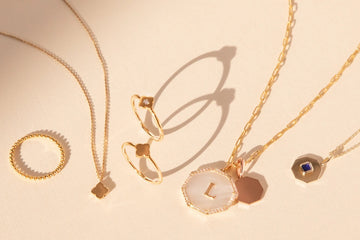

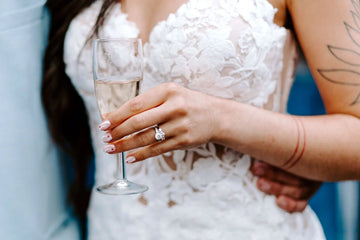


Clients sometimes tell me they want a ring to stay in the family before we have even chosen the stone.
I understand what they mean. They are already imagining the piece beyond the proposal, wedding or birthday that brought them to me. Of course, none of us can decide on day one whether jewellery will still be loved decades from now. A piece earns that place slowly. It is worn to work, taken on holiday, knocked against tables, resized, repaired and reached for again and again.
Time creates the attachment. My part is to listen well, make it personal and build it for a life that is still unfolding.

You do not need to arrive with the answer
This is often the first thing I tell a bespoke client.
Some people come with pages of saved images. Others say, “I know I’ll recognise it when I see it.” Both are perfectly good places to begin.
We look at stones, compare settings and metals, and try on sample rings. I also ask about everyday life. Are you someone who wears the same ring every day? Do you work with your hands? Do you want the piece to be noticed immediately, or discovered slowly?
You can learn a great deal from the pieces someone already wears. You can learn even more from the one they immediately put back in the tray.
There is no rush to force an answer. The design usually becomes clearer as we talk.
How Sourcing Actually Works

Every diamond and gemstone I use is selected with full transparency of origin, through suppliers I've built relationships with over years working across heritage jewellery houses before starting Kimjoux. That's not a claim I make for marketing purposes, it's a practical answer to a question I get asked directly in most consultations: where does this stone actually come from, and can you tell me.
When something is known, I will tell you. When a detail cannot be verified, I will say that too. Choosing a stone is a significant decision. You should feel comfortable asking direct questions and expect direct answers.
Living between cultures shaped the way I design
I was born in Vietnam and grew up in London, and that combination shows up directly in how I design, work that tends to read as both sculptural and restrained rather than one or the other.
Many of my clients also live across cultures. A colour, number, stone or gesture may carry a family meaning that I could never understand from a moodboard alone. So I ask. I listen. I pay attention to the details that make the piece feel familiar to the person who will wear it.

This matters especially with engagement rings and bridal jewellery. Family expectations, cultural references and personal taste can all arrive in the same conversation. My job is to bring them together in a way that feels natural.
The Practical Upshot
I think about the years ahead while I am designing.
Will the setting protect the stone? Can the ring be resized later? Will it feel comfortable enough to wear often? What will happen when it eventually needs repair?

These questions are part of the design from the beginning.
Jewellery that stays in a family usually shows signs of having been loved. There may be a softened edge, a tiny scratch or a band shaped by years of wear. I like that. It means the piece was part of someone’s life. Perhaps one day another person will wear it. Perhaps they will change it slightly to make it their own. That chapter belongs to them.
The part I can take care of is making something personal to you and strong enough to stay close for years.
This article grew from my conversation with Arcadia about jewellery and legacy.
If you are thinking about a piece for this chapter of your life, let’s start the conversation. Come with an idea, or just a feeling we can shape together.


