





Drop a venomous snake into a vessel carved from sapphire, according to legend, and it would die on contact.
Nobody sensible ever tested that theory. But the belief lasted for centuries. Sapphires were credited with protecting their owners from harm, poison and even illness. I'd rather let mine catch the light on a finger or an earlobe than test its reptile-repelling powers, but the legend says something about how seriously people once took this stone.
Sapphire has never been simply decorative. People have always attached meaning to it.
A Stone Built on Trust
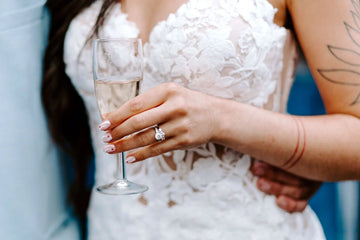
That reputation is part of why sapphire engagement rings still feel so significant today. Beyond the colour, sapphire has long been associated with honesty, loyalty and faithfulness.
Princess Diana understood the appeal. Instead of having a ring commissioned specially, she chose a 12-carat oval Ceylon sapphire from Garrard's existing catalogue, surrounded by fourteen diamonds and set in white gold. Decades later, Catherine, Princess of Wales, wears the same ring.
The stone has had a life of its own long before it reached either of them.

A Stone Wearing a Borrowed Name
Sapphire has spent much of its history wearing a name that probably belonged to another stone.
The word traces back to the Greek sappheiros, which most likely referred to lapis lazuli rather than the blue corundum we call sapphire today. As gem knowledge developed, the name eventually settled on the stone we now recognise as sapphire.
What sapphire actually is turns out to be closely connected to ruby. Both are varieties of corundum, a mineral made of aluminium and oxygen. Chromium is the main element responsible for ruby's red colour, while sapphire can take on many colours through different trace elements and combinations within the crystal.
Corundum is also extremely durable. At 9 on the Mohs scale, sapphire sits just below diamond and is tough enough for jewellery designed to be worn every day.

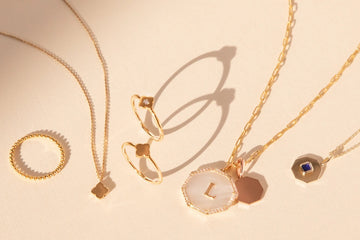
The Note Ring with Yellow Sapphire and Kiss Me Diamonds Ring
Beyond Blue
Most people picture one colour when they hear "sapphire". That's only part of the story.

Yellow sapphires have a warm, golden quality. Pink can range from soft and delicate to intensely saturated. Orange sapphires can be incredibly vivid. Then there are colour-change sapphires, which can move between different hues under different lighting conditions.
Parti sapphires behave differently again. Rather than changing colour with the light, they show distinct colour zones within the same crystal. Blue, green and yellow can appear together in one stone, with the pattern formed naturally as the crystal grows.
And then there's white sapphire. It has its own look and character, even though people sometimes consider it as an alternative to diamond.
The more sapphires I see, the more I realise how little sense it makes to think of sapphire as one particular colour.
What I Look For When Sourcing Sapphire
Origin
Kashmir sapphire is the name every serious collector eventually learns to recognise.
The deposits were discovered around 1881 after a landslide exposed sapphire-bearing rock high in the Himalayas. From 1882 to 1887, thousands of exceptional crystals were recovered. Production then declined sharply, and the short period of significant mining became part of what made Kashmir sapphire so rare.
The colour is famous, but so is the way the finest stones carry it. Fine Kashmir sapphires can have a soft, velvety appearance caused partly by fine rutile inclusions, giving the colour a quality that collectors still find difficult to replicate.
Sri Lanka, historically known as Ceylon, has produced sapphire for centuries and across a much wider range of colours, including the rare pink-orange variety known as padparadscha.
Myanmar's Mogok region, better known for ruby, has also produced fine sapphire. Madagascar has become an important modern source of high-quality sapphire, with material ranging across blues, pinks, yellows and other colours. Montana is known for its distinctive blue, green and teal sapphires, as well as material in other colours.
Origin is useful information, but I never look at it in isolation. The actual stone still has to earn my attention.
Treatment
Heat treatment is common across the sapphire trade and is an accepted way of improving colour and clarity when it is properly disclosed.
Unheated sapphire is much rarer, particularly when the colour is exceptional. That's where things become interesting for collectors. A fine sapphire with no evidence of heat treatment can command a significant premium because there are simply fewer stones like it available.
When I'm sourcing for a client, I want to know what has happened to the stone before we start designing around it. A laboratory report can help establish treatment status and, where possible, origin, but I still want to look at the stone itself.
Durability
Sapphire ranks 9 on the Mohs scale and has excellent toughness, which makes it one of the strongest choices for an engagement ring or another piece intended for regular wear.
That matters more than people sometimes realise. A beautiful stone has to make sense for the way someone actually wears their jewellery.

One of my favourite parts of sourcing gemstones is that you can have an idea in your head, and then one stone appears that makes you rethink the whole thing.
For me, the best sapphire is the one that has something going on beyond the specification sheet. The colour, the way it reacts to light, the inclusions, the origin and the treatment history all matter, but the stone still has to make you want to keep looking at it.
If you're choosing a sapphire for an engagement ring, or simply want to understand what makes one stone different from another, my Guide to Choosing a Sapphire goes into more detail on what I look for.
If you've already found a sapphire you can't stop thinking about, get in touch and let's talk about what we could do with it.


